

Clothing colors come together more easily when one favorite piece leads the outfit.
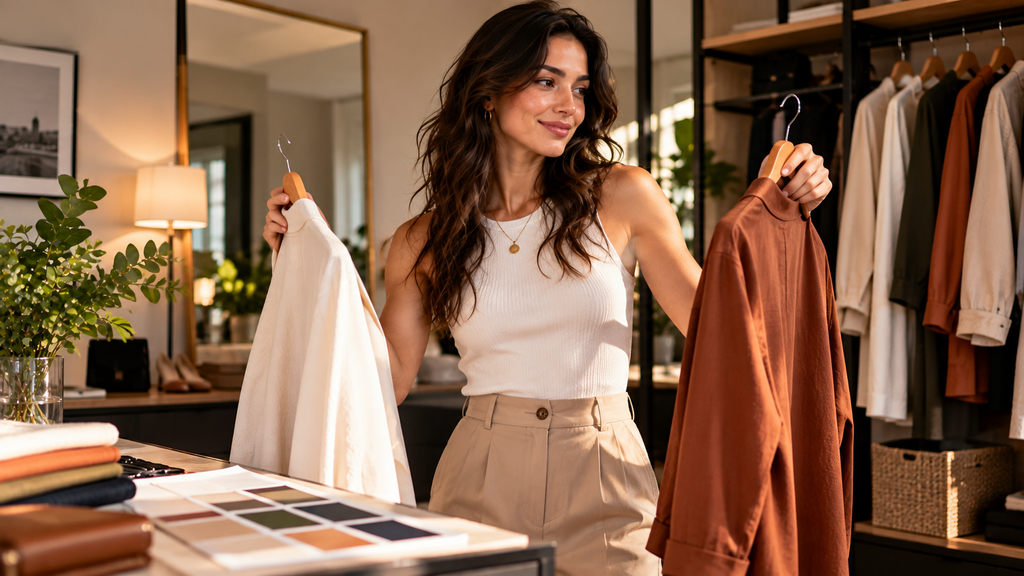
One favorite garment can provide the starting point for several color combinations. Its shade, print, or contrast gives the rest of the outfit a useful direction.
Try the possibilities beside clothes you already wear. A few familiar connections can make experimenting with color feel enjoyable rather than complicated.
Let a Familiar Neutral Set the Base
Start with trousers, denim, or a jacket that already works in several outfits. Place a few tops beside it and compare them in daylight.
Notice which combinations you actually like. A neutral is useful when it supports your choices, rather than because a guide calls it universally necessary.
A base piece gives you a useful reference when a new color seems difficult. Hold it beside the garment instead of trying to judge the shades separately.
For example, a navy bottom might support a pale blue top, a warm cream shirt, or a brighter accent. Compare the actual combinations rather than memorizing possibilities.
Give One Color More Attention
Try a red knit with quieter trousers and shoes. Letting one color occupy the main visual role can make the remaining decisions easier.
You can still wear several strong colors. If the combination feels busy to you, reduce one element and compare the result.
Consider using the strongest color near the area you want to emphasize. A vivid top draws attention differently from a bright bag carried beside quieter clothing.
You can adjust that emphasis without abandoning the shade. Moving color from a large garment to a smaller accessory offers a different balance with familiar pieces.
Check the Denim Wash
Denim varies from pale blue to nearly black, with warm or cool fading. Those differences can change how a top looks beside it.
Test the actual pair instead of assuming all jeans are interchangeable. A darker wash may provide the contrast your outfit needs.
Try the same top with two denim washes if you own them. The contrast may explain why one pairing feels clearer or more relaxed than the other.
Use that observation when choosing future denim. A useful wash is one that supports the tops and layers you already return to, not merely the main listing image.
Look at Where the Colors Sit
A bright jacket creates a different effect from bright shoes because it covers more of the outfit. Consider area as well as shade.
Try moving the accent to a smaller piece if it feels overwhelming. A bag or scarf lets you explore a color without buying more clothing.
Look at the complete outfit, including outerwear and the bag. An extra color can enter through these finishing pieces even when the clothing itself feels coordinated.
Try removing or changing one element when the result seems crowded. You may need a clearer distribution of color rather than a different palette altogether.
Use Weather as an Option, Not a Rule
Light colors can feel appealing in warm weather, while deeper shades may suit your cooler-season layers. Neither choice is compulsory.
Let your existing wardrobe and preferences lead. Seasonal suggestions help generate ideas, but they do not determine what you are allowed to wear.
Use seasonal layers as a chance to test another shade. A scarf or cardigan can introduce a color while your main outfit remains familiar and comfortable.
Keep the colors you enjoy throughout the year if they still suit your plans. The weather changes practical requirements, but it does not need to dictate every shade.
Check the Outfit in Natural Light
Indoor lighting can disguise differences between blacks, creams, and navy shades. View the complete outfit near a window before judging a close match.
If the shades differ, decide whether you like the contrast. Similar colors do not need to be identical to work together.
Photograph a close color combination near a window and compare it with the mirror view. This can help you spot differences that are easy to miss indoors.
Decide whether the relationship feels intentional to you. An obvious contrast can work beautifully, while an almost-match may need another supporting shade to feel clearer.
Borrow a Color From a Print
Choose one visible color in a patterned blouse and repeat it in your trousers, shoes, or layer. The print provides a ready-made connection.
Use a quieter piece elsewhere if you prefer less visual activity. You can let the patterned garment carry most of the interest.
Look for a smaller color within the print as well as its dominant shade. Borrowing that quieter detail can produce a less expected combination with existing accessories.
Try one version with a main color and another with a secondary one. The pattern provides several possible starting points without requiring a completely new outfit.
Introduce Unfamiliar Shades Gradually
Try a scarf or accessory in a color you rarely wear. Combine it with a dependable outfit to judge how the shade feels on you.
If you enjoy it repeatedly, consider a larger piece later. This avoids rebuilding your wardrobe around a color you only liked in a photograph.
Choose a small piece in a color you are curious about and wear it several times. Notice which existing outfits welcome it naturally.
Those successful pairings tell you whether a larger garment in the same shade would be useful. You can build confidence through wear instead of a bigger speculative purchase.
Consider the Setting’s Expectations
Some workplaces and celebrations have explicit dress requirements. Check those first, then choose a color combination that fits the occasion and your preferences.
For less formal settings, experiment more freely. Appropriateness depends on context, rather than a fixed list of acceptable colors.
For an event, try the full palette alongside the dress requirements. A color combination you love may need different fabric, footwear, or coverage to suit the setting.
For an ordinary day, use comfort and your own preference as the guide. The same shades can feel quite different when the silhouette and textures change.
Save Your Favorite Combinations
Photograph outfits you enjoy and note their main colors. Over time, you may see a palette that feels more personal than a shopping guide’s suggestions.
Use that record when choosing new pieces. It helps you buy colors that connect with your wardrobe instead of standing apart from it.
Review the photographs for combinations you repeated, not only the ones you initially admired. Repeated wear provides a practical measure of how comfortable a palette feels.
Use those colors as an anchor when exploring new shades. The wardrobe can develop gradually while retaining enough familiar combinations to keep getting dressed straightforward.
Try a Two-Minute Color Experiment
Choose one bottom and place three tops beside it: a similar shade, a clear contrast, and a patterned option. Compare them before adding accessories.
Then try the favorite with your usual shoes and bag. The whole outfit will show whether the first impression remains convincing once the finishing pieces join.
Save the successful version for another day. A small experiment becomes more useful when you can return to the combination instead of rediscovering it each time.
Repeat the Connection, Not Every Shade
A coordinated outfit can come from a single repeated color or a deliberate contrast. Exact matching is only one option.
Start with one garment, test the combination in daylight, and keep the result you enjoy. The method should reduce decisions rather than create more rules.
Explore Colors You Will Love Combining
Discover clothing and accessories in shades that inspire another outfit. Use a favorite piece as your starting point and explore the colors that connect with it.
EXPLORE NEW ARRIVALSYou will be redirected to the official SHEIN website.

 SHEIN Products in 2026: Everyday Finds Worth Exploring Beyond Fashion
  SHEIN Free Trial Program: Apply and Create Reviews That Stand Out
  Men’s Wardrobe Essentials: Easy Outfit Formulas for Work and Weekends