

Simple clothes can look more elegant when the fit, colors, and finishing details work together.
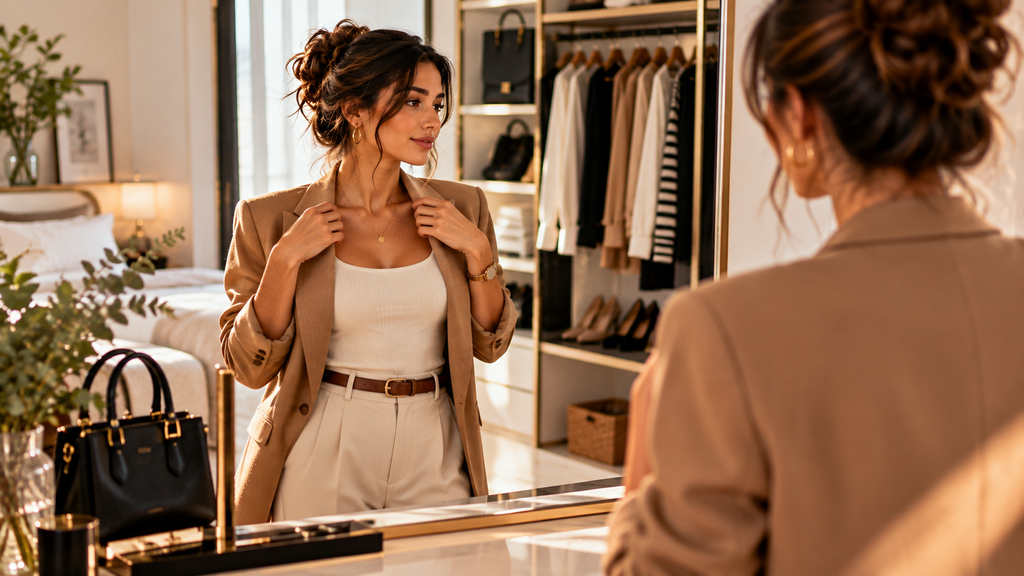
A simple blouse and familiar trousers can feel noticeably more elegant when their colors, proportions, and accessories come together. The useful changes are often surprisingly small.
Try refining one outfit you already enjoy. You can discover a more complete look through thoughtful combinations rather than a large collection of new pieces.
Let the Garments Fall Naturally
Notice pulling across buttons, gathered fabric at the waist, or a hem that catches on shoes. Those distractions can interrupt an otherwise clean outfit.
Try a different size, adjustment, or existing piece where appropriate. The aim is an outline that stays comfortable while you move.
Choose the area that looks busiest and adjust only that part first. A sleeve position or cleaner waistline may reveal that the rest of the combination already works well.
Keeping the experiment small helps you understand the result. You can build confidence in the adjustment instead of replacing several pieces without knowing which change helped.
Create a Calm Color Relationship
Compare shades beside one another in daylight. A cream knit and brown trousers might feel softer together than pieces that looked similar under artificial lighting.
A calm palette can still include color. Use a repeated shade or a quieter supporting piece to give the outfit a connection.
Try a tonal combination using colors you wear frequently. Similar shades can create a connected look while differences in texture keep the outfit from feeling flat.
Then compare a clearer contrast with the same shoes and accessories. The better version is the one that gives the effect you enjoy, rather than a universally correct palette.
Look at Fabric Condition
Check for pilling, lint, creases, and stretched edges. Address each using the garment’s care instructions before judging whether the piece looks polished.
Fabric composition alone cannot promise an elegant appearance. How the garment fits, falls, and is maintained matters as well.
Prepare a favorite outfit according to each garment’s care guidance before deciding it feels tired. Suitable maintenance can restore details you stopped noticing during frequent use.
Check whether the pieces still fall as you prefer. If one has changed shape through wear, another familiar garment may create a cleaner combination without further shopping.
Remove One Competing Accessory
If the outfit feels busy, remove a necklace, scarf, or oversized bag and compare. You may prefer the clearer effect of fewer focal points.
Keep the accessory you enjoy most. Refining an outfit does not require abandoning personal details; it means choosing where attention goes.
Try keeping one distinctive detail and making the others quieter. A patterned scarf might become the focal point while the bag and jewelry remain simple.
This gives personality a clear place in the outfit. You can retain the piece you enjoy without asking every accessory to compete for equal attention.
Add Structure Where You Want It
Try an open jacket over a softer top, or a belt over a loose dress. Each adds definition in a different place.
Check the result seated and standing. Structure should not create stiffness or make the garment difficult to wear.
A structured layer can change a casual base quickly. Compare an open jacket with a softer cardigan and notice which version suits your destination and comfort preferences.
Check that the shoulders and sleeves move easily over the base garment. The attractive outline should continue working once you sit, walk, and carry your bag.
Match Shoe Condition to the Outfit
A carefully assembled outfit can feel unfinished beside visibly neglected shoes. Clean and inspect your pair with care appropriate to its material.
Compare shape as well as condition. A streamlined shoe and a chunky sole create different effects, and either may suit your intended look.
Look at where the trouser or skirt hem meets the shoe. That transition can have a stronger effect on the outfit than an extra accessory near the neckline.
Try a different familiar pair and compare the complete silhouette. You may find a useful change without altering the main garments at all.
Make the Outfit Repeatable
Choose combinations that work with the layers and accessories you already own. An elegant outfit becomes more useful when it does not require elaborate preparation.
Save the version you like. Repeating a successful combination is a practical way to refine your wardrobe without constantly buying something new.
Choose one outfit for an ordinary day and another for a slightly smarter plan using shared pieces. The comparison shows where a small change genuinely helps.
A wardrobe that supports both situations can feel more capable without growing much. The useful addition is the one that connects existing pieces to another real occasion.
Keep Movement Part of the Assessment
Walk, sit, and reach while wearing the complete outfit. Check whether you can move without pulling at a neckline or adjusting a waistband.
Ease changes how an outfit feels throughout the day. A composed appearance is harder to sustain when the clothing demands constant attention.
Notice how naturally you behave in the outfit after the first few minutes. An enjoyable combination should let you stop thinking about clothing and return attention to the day.
Use that response alongside the mirror view. The version that looks composed and feels comfortable is a stronger repeat option than one that demands continual adjustment.
A Finishing Routine That Takes a Few Minutes
Check the neckline, waist, sleeves, and footwear before leaving. These four areas often explain why a simple outfit feels complete or slightly unresolved.
Make only the adjustments that improve the result. A neat tuck or different shoe can be enough without adding several accessories.
Photograph the version you like so you can repeat it. A personal record is more practical than relying on new inspiration every time you get dressed.
Over time, those saved outfits reveal the shapes and details you prefer. Shopping becomes more focused because you can see what already works.
Give the Outfit One Clear Mood
Decide whether you want the combination to feel relaxed, sharper, or suitable for an evening plan. This helps choose between accessories that each look attractive individually.
A familiar top and trousers can support several moods through footwear and a layer. Start with what the occasion actually needs.
The goal is a complete outfit rather than a collection of pleasing pieces. A clear direction makes the smaller decisions easier to settle.
Finish With One Deliberate Choice
Settle on the detail that makes the outfit feel complete, whether it is a neat tuck, a familiar bracelet, or a different pair of shoes.
Simple clothes do not need to be dressed up endlessly. A few considered choices can make an ordinary combination feel ready for the day.
Explore Pieces That Complete an Elegant Outfit
Discover clothing and accessories that work with your favorite combinations. A thoughtful addition can give familiar pieces another appealing direction.
EXPLORE ELEGANT ESSENTIALSYou will be redirected to the official SHEIN website.

 SHEIN Products in 2026: Everyday Finds Worth Exploring Beyond Fashion
  SHEIN Free Trial Program: Apply and Create Reviews That Stand Out
  Men’s Wardrobe Essentials: Easy Outfit Formulas for Work and Weekends